
What I learned building “Duolingo for Bible Verses”
Introducing... BibleLingo!

Hey, I’m Joshua 👋 I write about the messy, thoughtful, and sometimes uncomfortable sides of product building — especially when it comes to product strategy, discovery, and trade-offs. I’ve led product at startups and public sector platforms, and I’m now building an AI companion app for seniors (in my day job)!
This post is part of the ongoing conversations we’re having in Curious Product, a small Telegram community of product folks who care more about craft than clout. If you’re curious, we jam weekly on things like “Which feature would you kill?”, “How would you validate X?”, and more here on Telegram.
I love Duolingo. It’s delightful, it’s addictive, and somehow it makes me feel accomplished even when I’ve only spent five minutes learning.
I also love memorising Bible verses. Not out of obligation, but because the right verse at the right moment can bring deep comfort. It anchors me when my soul feels scattered.
So I asked myself: What if Duolingo met Scripture memory?
A tool that helped people hide God’s Word in their hearts… with the same joy and flow of a language-learning game.
That’s when I decided to build it.
⚙️ The first attempt: Lovable + Vibes
Since I’ve used Lovable before for spinning up prototypes, I figured: easy. Give me a few hours and I’ll have a working MVP. How hard could it be?
Turns out: pretty hard.
I ran straight into a wall.
See, Lovable is great for prototyping on vibes. I lost count of the number of times Lovable helped me out in a pinch when I needed to mock up something to show my engineers, quickly. But building something people can actually use (with data, flows, logic, edge cases)… that’s another story. This is totally not on Lovable. I know there is still so much I need to learn and improve in.
But this is also an honest sharing on how I jumped straight into thinking I can build out a product without much planning. I spent way too long stuck in debug loops and second-guessing myself. And in the worst moments, wondering: How am I even cut out to work in tech?
🔁 The second try: Base44 + ChatGPT + a bit of patience
Then I discovered Base44, a platform that actually comes with a backend and clean UI logic. It felt more structured, less “throw stuff around and pray it works,” and more “build with intention.”
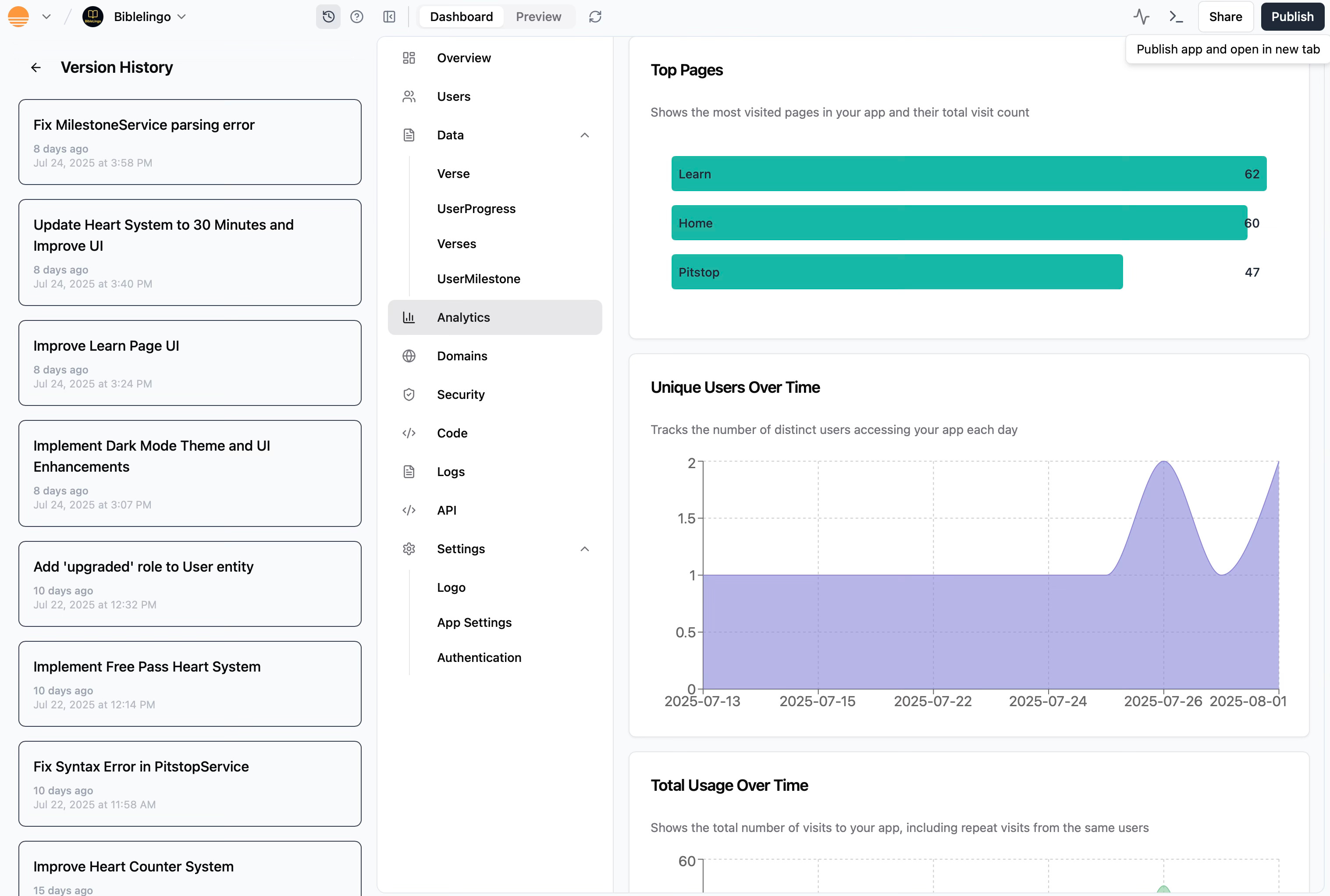
This time, I did things differently.
I opened up ChatGPT, and instead of rushing into building, I walked through the core user journey.
I clarified: What’s the ideal experience? What prompt structure will Base44 need to deliver that?
I took it one step at a time. No illusions of building it in a day. Just steady progress.
Eventually, something clicked. And then it worked.
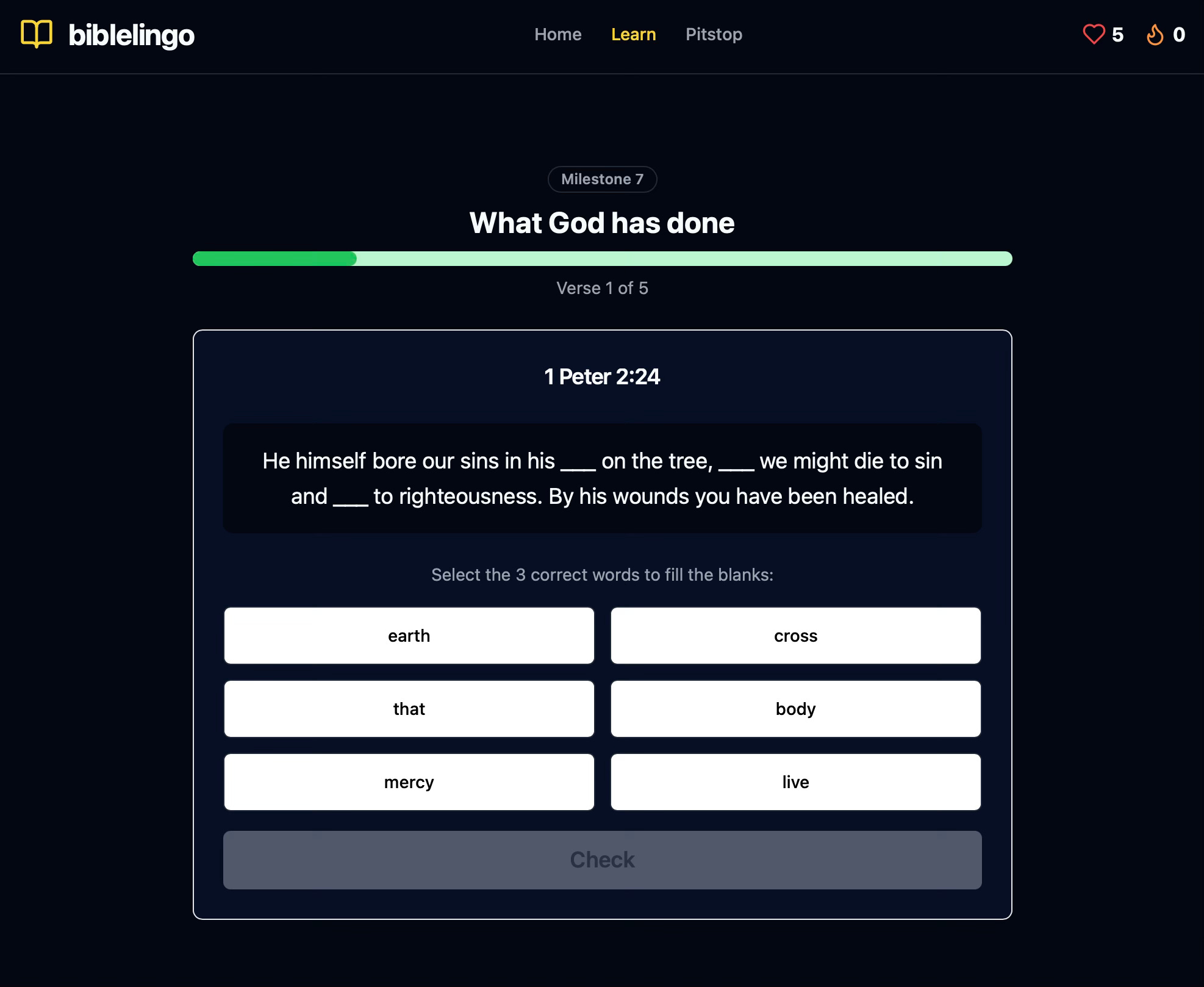
🚀 So… here it is: my take on “Duolingo for Bible verses”.
I am calling it BibleLingo.
Built with Base44, guided by ChatGPT, and powered by sheer stubbornness.

💡 What I learned from all this:
Building > Consuming
I’ve watched countless YouTube videos and read dozens of “how I built this in 48 hours” Substack posts. None of them taught me as much as just trying to build something myself.
Build what you care about
When it’s 11pm and you’re tired, passion is the only thing that pushes you to tweak one more prompt or debug one more screen. I wouldn’t have finished this if this wasn’t something close to my heart. Something that I really wanted to see come to life.
The myth of instant building is wearing thin
Sure, it’s fun to brag about how I “vibe built” something in minutes or over the weekend. But how true is that? How easy is it to build something useful, repeatable, and meaningful? That takes structure. It takes knowing how to talk to machines properly (yes, context engineering is real). Thankfully, more no-code tools like Lovable and Base44 are now offering guides, patterns, and best practices to help us out - not to kill creativity, but to channel it.
🙏 Final thoughts
This version of BibleLingo isn’t perfect. It’s more like v0.8, with love.
But it’s real, and it works. And I’m proud of what I learned along the way.
Thanks to Base44 for the powerful toolset.
Thanks to ChatGPT for being my late-night product therapist.
And thanks to you, for reading.
If you have tried the app and you have feedback or if you would like to follow along as I build in public, drop me a direct message - I am all ears!
Stay curious, be well!
Joshua
If this sparked something in you — a tension, a disagreement, a parallel experience — I’d love for you to join the conversation inside our Curious Product Telegram group. It’s a small, thoughtful corner of the internet where we reflect, challenge, and sharpen our product management craft together.
Most of our members found their way in via this newsletter. If you’re reading this, you’re already halfway there. Feel free to join the Curious product Telegram community anytime.